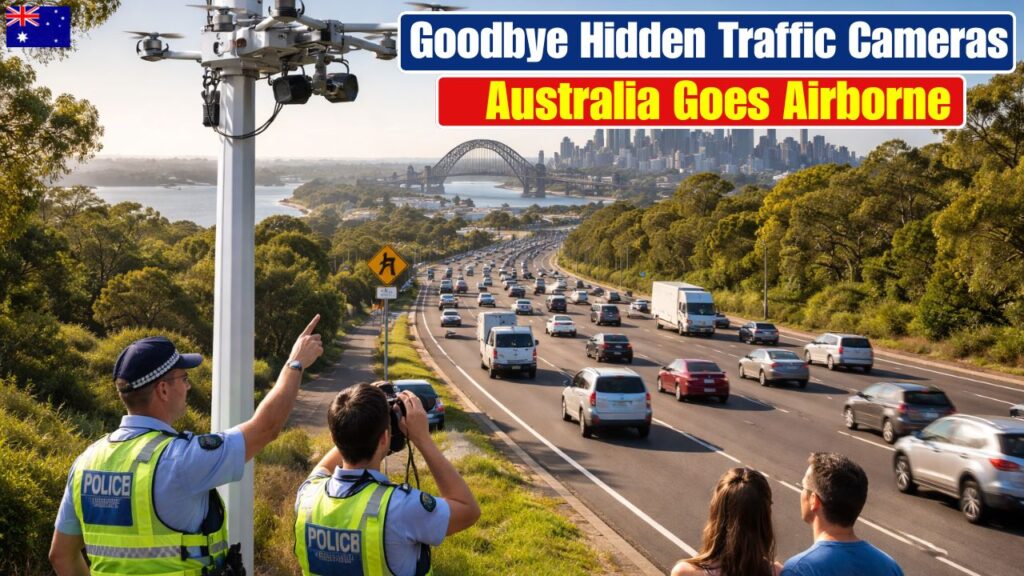
Goodbye to Hidden Traffic Monitoring – Australia is entering a new era of road enforcement as nationwide aerial traffic monitoring officially activates in January 2026. The move signals a major shift away from hidden roadside cameras toward high-altitude surveillance that can track driving behaviour across highways, suburbs, and regional routes. Using aircraft-mounted and drone-based systems, authorities aim to reduce serious crashes, target repeat offenders, and improve overall compliance. For everyday drivers, this change means fewer blind spots on the road and greater accountability behind the wheel, reshaping how traffic laws are enforced across the country.
Nationwide Air Camera Rollout Reshapes Traffic Enforcement Across Australia
The nationwide air camera rollout marks one of the biggest traffic enforcement upgrades Australia has seen in decades. These aerial systems can monitor speeding, mobile phone use, unsafe lane changes, and tailgating over long distances, unlike fixed cameras that only capture brief moments. For drivers across Australia, this means enforcement is no longer limited to known black spots. Authorities say the technology is designed to encourage safer driving habits rather than issue surprise fines. By covering urban corridors and remote highways alike, the system aims to reduce fatal crashes and improve compliance consistently, regardless of location or time of day.
 Goodbye to Low Age Pension as Centrelink Adds Up to $1,178 Extra for Seniors in January 2026
Aerial Traffic Surveillance Signals New Era for Australian Citizens on the Road
For Australian citizens, the introduction of aerial traffic surveillance changes long-standing assumptions about how roads are policed. Aircraft-based cameras provide a broader view of traffic flow, allowing enforcement teams to identify dangerous patterns rather than isolated mistakes. Officials argue this approach supports education-first enforcement, where warnings and targeted patrols can be deployed before accidents occur. However, privacy concerns have also emerged, with assurances given that footage is used strictly for road safety purposes. As the system goes live, motorists are urged to treat every journey as monitored and prioritise lawful, defensive driving.
 Goodbye to Licence Freedom for 60+ Drivers as Medical Checks Cancel Licences in January 2026
| Monitoring Feature | What It Detects | Coverage Area |
|---|---|---|
| Aerial Speed Tracking | Consistent speeding over distance | Highways and major roads |
| Lane Behaviour Analysis | Unsafe lane changes and weaving | Urban and suburban areas |
| Mobile Phone Detection | Handheld phone use while driving | Nationwide routes |
| Tailgating Observation | Unsafe following distances | Freeways and arterial roads |
January 2026 Air Surveillance Launch Alters Driving Rules for Australians
The January 2026 launch of air surveillance is expected to influence how Australians approach everyday driving. With enforcement extending beyond fixed cameras, drivers can no longer rely on slowing down only at known locations. Road safety agencies emphasise that fines remain a last resort, with the primary goal being behaviour change and accident prevention. The expanded visibility also helps authorities respond faster to dangerous conditions or repeat risky behaviour. Over time, officials expect the presence of air monitoring to contribute to smoother traffic flow, fewer severe collisions, and greater respect for road laws nationwide.
Road Safety Technology Expansion Impacts Drivers Nationwide in the Australian States
The expansion of road safety technology is being felt across the Australian states, from densely populated cities to rural transport corridors. Aerial monitoring allows consistent enforcement standards, reducing gaps between jurisdictions and improving fairness. Transport experts believe this visibility encourages long-term cultural change, where safe driving becomes the norm rather than a reaction to enforcement. While some drivers remain cautious about increased monitoring, authorities stress transparency and clear guidelines on data use. As the system matures, it is expected to complement existing cameras and patrols rather than replace them entirely.
Frequently Asked Questions (FAQs)

1. When do nationwide air traffic cameras start operating in Australia?
The system becomes active across Australia from January 2026.
2. What driving behaviours can aerial cameras detect?
They can monitor speeding, phone use, unsafe lane changes, and tailgating.
3. Will aerial monitoring replace roadside speed cameras?
No, it will work alongside existing cameras and police patrols.
4. Are privacy protections in place for Australian drivers?
Yes, authorities state footage is used strictly for road safety enforcement.