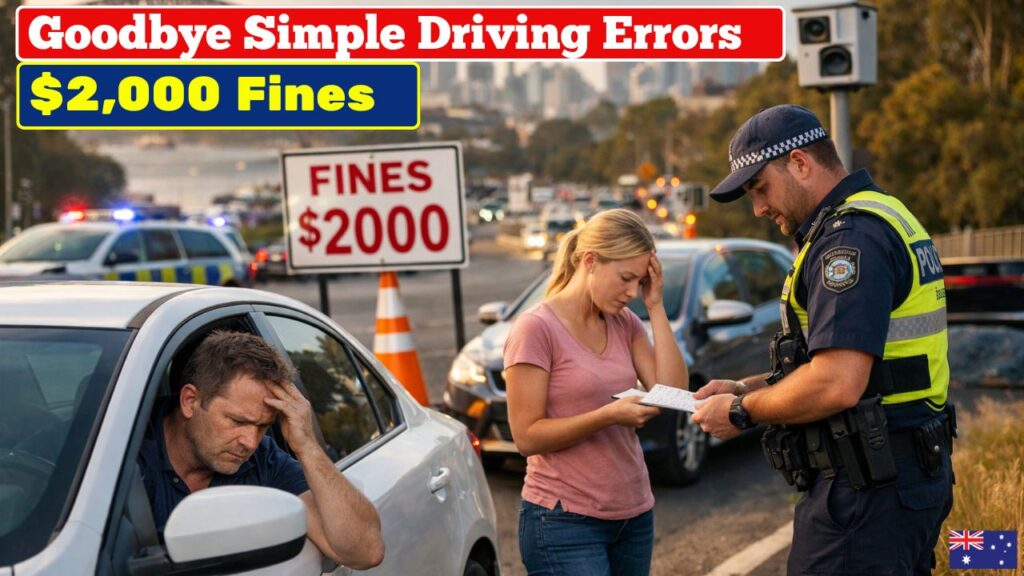
Goodbye to Simple Driving Mistakes – Australians are being warned that everyday driving habits could soon come with much heavier penalties, as new road safety rules take effect nationwide in January 2026. Under updated enforcement measures, fines for common driving mistakes are set to rise sharply, with penalties reaching up to $2,000 in some cases. The changes aim to curb risky behaviour, improve compliance, and reduce accident rates across Australia. From speeding and mobile phone use to seatbelt breaches, drivers will need to be more cautious than ever. Understanding what has changed, why it matters, and how it affects motorists is essential for avoiding costly consequences.
Higher Driving Fines Across Australia Signal Tougher Road Safety Rules
Across Australia, authorities are rolling out higher driving fines to address persistent road safety concerns and rising accident statistics. From January 2026, penalties for what were once considered minor offences will increase significantly, with some fines reaching the $2,000 mark. These adjustments reflect a broader push to deter unsafe behaviour such as speeding in school zones, illegal mobile phone use, and failure to wear seatbelts. Lawmakers believe financial deterrence is one of the most effective tools for changing habits. For Australian drivers, this means stricter enforcement, increased roadside monitoring, and less tolerance for repeat or careless mistakes that put lives at risk.

Australian Drivers Face Steeper Penalties for Common Traffic Mistakes
Australian drivers will notice that even small lapses in judgment can now carry serious financial consequences. The revised penalty structure targets frequent violations like low-level speeding, running red lights, and distracted driving. Officials have stressed that the intent is not revenue generation but behavioural change. With advanced detection technology and expanded camera networks, compliance is expected to be monitored more closely than ever. Motorists who fail to adapt could see fines, demerit points, or licence suspensions escalate quickly. Staying informed about updated limits and enforcement zones will be critical for drivers hoping to avoid these newly increased traffic penalties.
 Goodbye to Hidden Traffic Monitoring as Australia Activates Nationwide Air Cameras in January 2026
| Offence Type | Previous Fine | New Fine (Jan 2026) | Additional Penalty |
|---|---|---|---|
| Mobile phone use while driving | $555 | Up to $2,000 | Demerit points |
| Speeding in school zones | $483 | $1,800+ | Licence suspension risk |
| Seatbelt offence | $387 | $1,200 | Demerit points |
| Red light violation | $514 | $1,500 | Camera enforcement |
Canberra Government Tightens Enforcement to Reduce Road Accidents
The Canberra government has positioned these fine increases as part of a long-term national road safety strategy. Officials argue that tougher penalties, combined with smarter enforcement, will help reduce fatalities and serious injuries. Investment in AI-powered cameras, expanded police patrols, and data-driven enforcement zones is expected to complement the new fines. Drivers who repeatedly ignore road rules may face escalating consequences beyond monetary penalties. For motorists, the message is clear: compliance is no longer optional. Understanding the updated rules and adapting driving behaviour will be essential as Australia moves into a stricter enforcement era.
How Australians Can Avoid Costly Driving Penalties in 2026
Australians can protect themselves from hefty fines by adopting safer and more attentive driving habits. Simple actions such as obeying posted speed limits, avoiding mobile phone use, and ensuring all passengers wear seatbelts can make a significant difference. Staying updated on rule changes in each state and territory is equally important, as enforcement methods may vary. Many road safety groups recommend using driver assistance apps, planning routes in advance, and allowing extra travel time to reduce pressure on the road. By focusing on awareness and responsibility, motorists can avoid unnecessary penalties while contributing to safer roads nationwide.
Frequently Asked Questions (FAQs)
 Goodbye to Low Age Pension as Centrelink Adds Up to $1,178 Extra for Seniors in January 2026
1. When do the increased driving fines start in Australia?
The new, higher fines take effect nationwide from January 2026.
2. What is the maximum fine drivers could face?
Some offences may attract fines of up to $2,000 depending on severity.
3. Do the new fines apply in all Australian states?
Yes, the changes apply across states and territories, with minor local variations.
4. Are demerit points increasing along with fines?
Many offences will also carry higher demerit points under updated enforcement rules.